- Today, the Zahidnyi Buh agronomic service follows a clear philosophy: "Do only what is necessary on the field to achieve the desired result." However, the path to this flexibility took over 14 years of gaining new experience and searching for ideal technical solutions.
14 years ago, in 2012, Zahidnyi Buh set a goal to move away from "classic" tillage technology involving reversible plows. The company shifted toward non-inversion systems, which at that time were gaining popularity in neighboring Poland and Germany.
After evaluating various tillage approaches — ranging from direct drilling into mulch and strip-till to combined (mixed) tillage — the company decided to focus on the latter. A visit to the United Kingdom left a profound impression on the management team. The 150-year history of mechanized agriculture in the British Isles confirmed that the chosen direction was correct.
The first units to reach the company's agronomists were the Great Plains Simba SLD 460. These are combined disc-tine cultivators featuring a massive set of heavy discs (60 cm in diameter) and powerful tines spaced 65 cm apart.
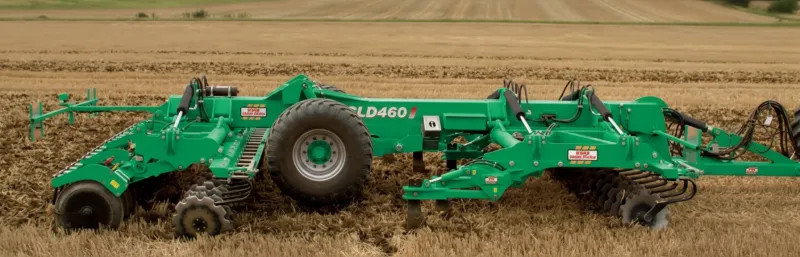
Despite its significant advantages (fuel savings due to fewer passes), this equipment also faced a series of drawbacks. These were especially pronounced on poorly structured soils with an existing plow pan — a hard layer created by years of plowing. This was further complicated by the era's standards of harvesting and straw distribution, which, to put it bluntly, were not a priority at the time.
We must also not overlook the resistance from operational staff — from machinery operators to field agronomists and division managers. Anything new was met with strong skepticism.
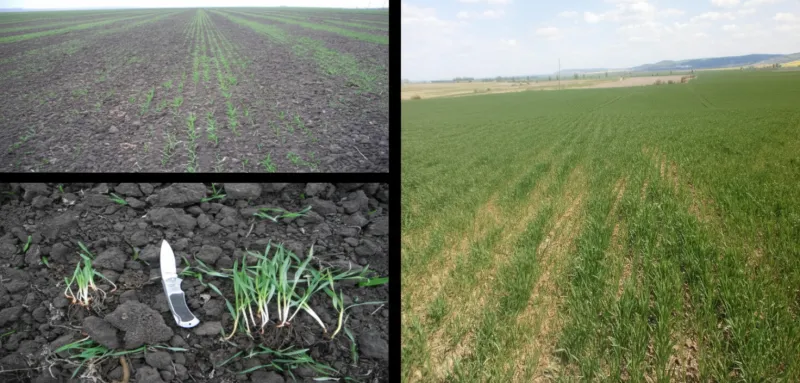
This technology significantly boosted operational productivity. By the third year, having overcome most issues with critical soil compaction, the new approach began to outperform previous years' results. The shift demanded more attentive and highly skilled agronomists and operators; consequently, the professional growth of our staff became a key driver in improving yields.
However, by 2015–2016, it became clear that while the initial units were versatile, they were not the optimal choice for our region, which differs significantly from the damp and misty "British Isles." It was during this time that HORSCH machinery began to gain significant popularity — largely thanks to its owner and visionary, Michael Horsch.
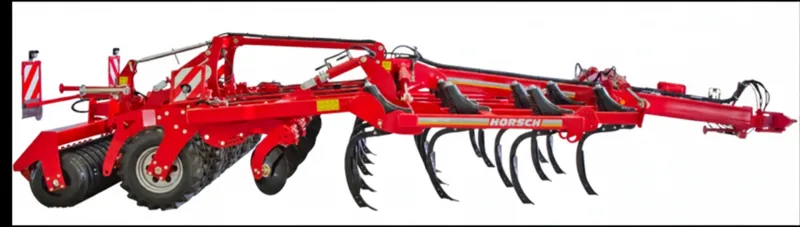
Direct engagement with him and his vision catalyzed the next step in our farm's tillage evolution. Our approach to harvesting quality and requirements underwent a radical transformation: wide-cut HORSCH JOKER compact disc harrows were introduced, and the heavy Simba SLD 460 units were replaced by their counterparts — the HORSCH TIGER MT 6. These machines offered a wider working width, required less pulling power, and performed exceptionally well when managing large amounts of crop residue.
Few believed it was possible to plant sugar beets after corn without plowing. Despite the skepticism, year after year, Zahidnyi Buh sowed 15–20% of its sugar beet areas specifically after corn using only non-inversion, combined tillage units. Naturally, while emergence was 5–7% lower, the final results were comparable to fields planted after stubble predecessors (with yield differences of only 2–3%).
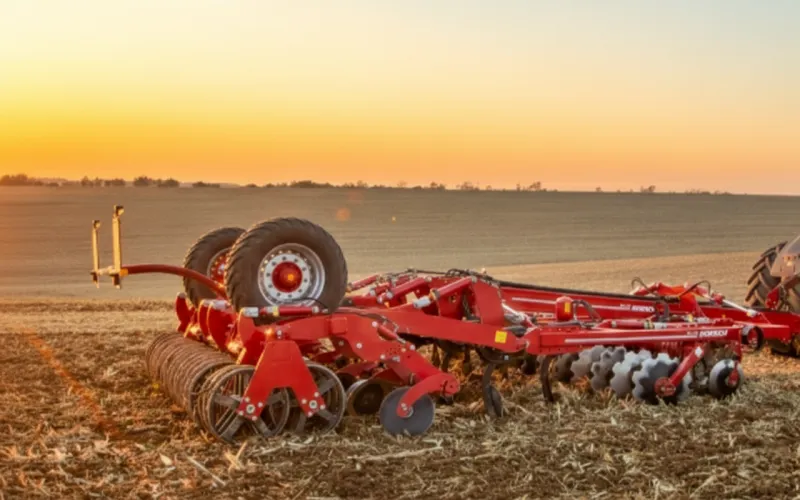
After four years of operation, our agronomists and machinery operators had fully embraced a new reality: a clumpier soil surface or the presence of crop residues posed no obstacles to high-quality crop development. In fact, these methods yielded significantly higher results than previous traditional practices. A profound understanding of the technology had taken root.
The company continued its relentless pursuit of innovation, exploring new configurations and operational combinations. To further enhance the tillage fleet, HORSCH TIGER AS and Koeckerling Vector units were introduced.
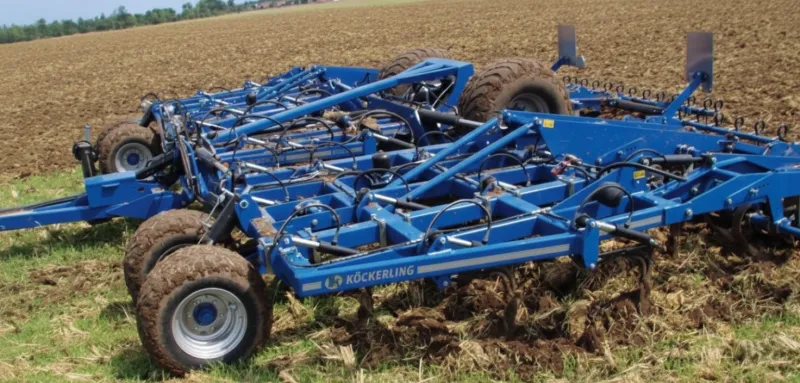
Further development led us to trial Strip-till technology in 2019. To this day, the company continues to expand the application of this method across various crops, including sugar beets. However, it would be inaccurate to claim that Strip-till will entirely replace combined tillage.
Our vision is that these systems will work side-by-side, helping to realize a field's maximum potential by leveraging the strengths of each: soil conservation, organic matter accumulation, increased erosion resistance, moisture retention, and yield maximization.
The company's modern vision for tillage is to do exactly what is necessary on each specific field to achieve maximum results. To accomplish this, an agronomist must have an optimal toolkit at their disposal: ranging from direct drilling capabilities to "intensive" combined tillage solutions.


en
Non-Inversion Tillage: The Zahidnyi Buh Success Story
26.02.2026
History


Share this news